Acoustic Data-based Characterization of Incipient Boiling for Space Applications
Cal Poly SLO Data Science Senior Capstone, NASA Ames Research Center
Overview
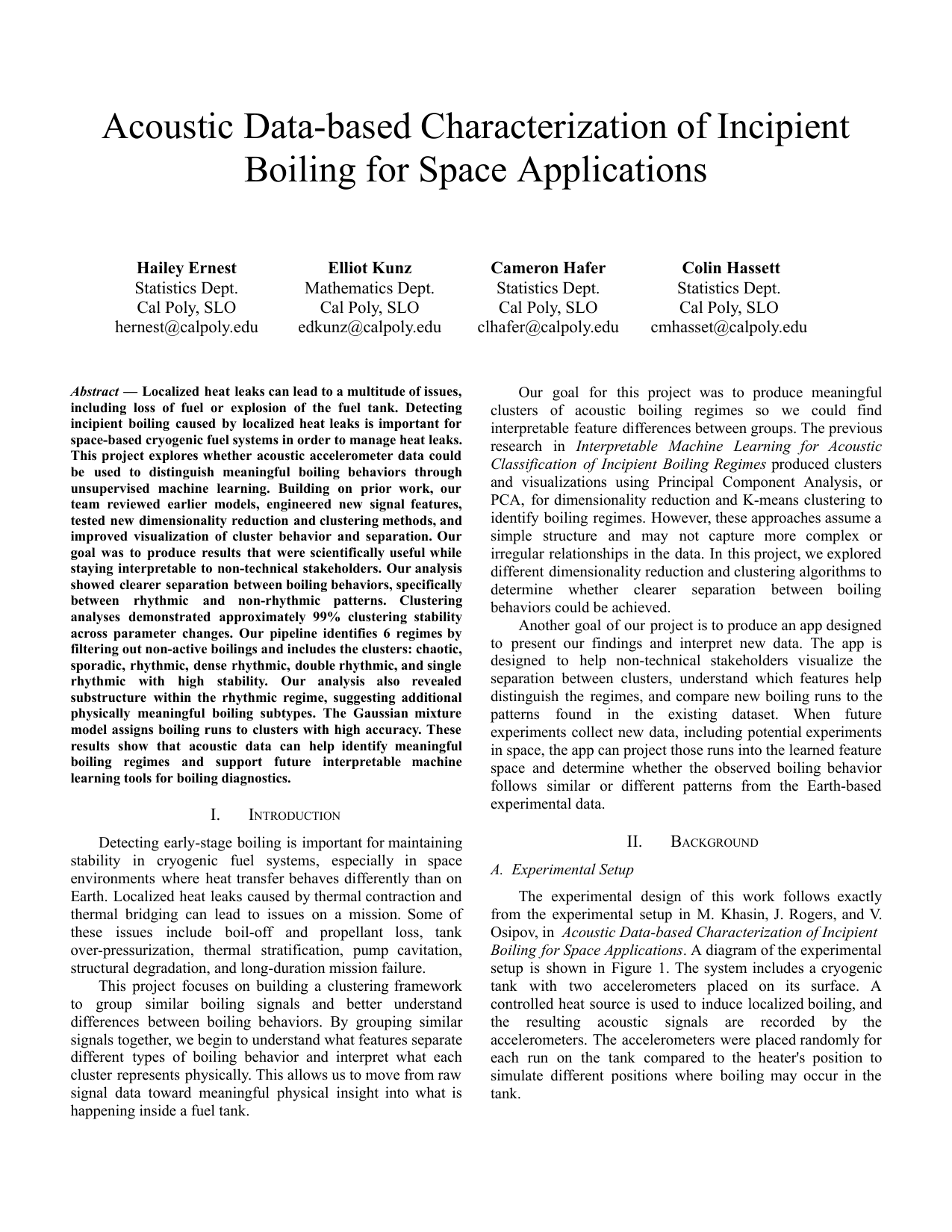
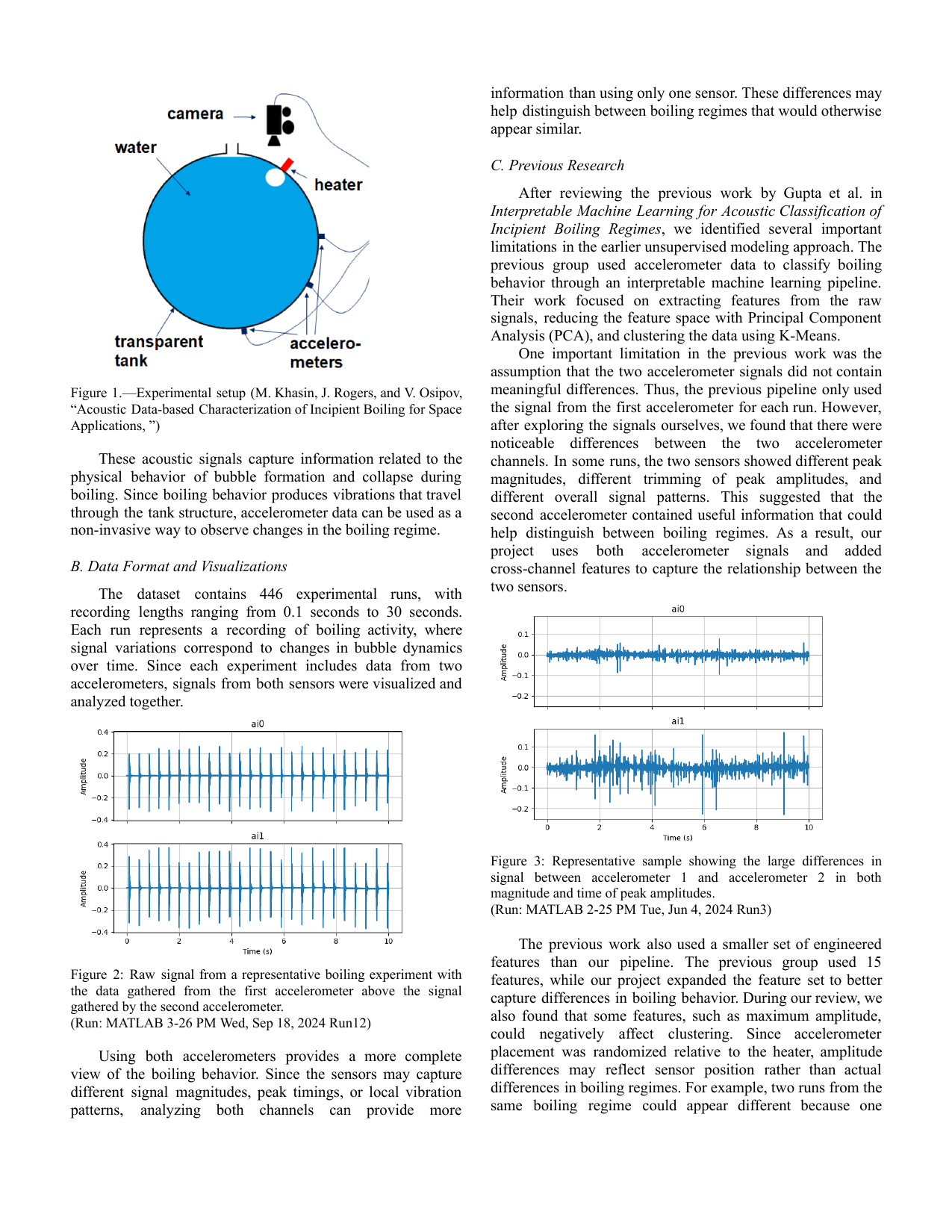
Localized heat leaks in cryogenic fuel systems can trigger boil-off, tank over-pressurization, and long-duration mission failure. This project uses acoustic accelerometer data and unsupervised machine learning to identify distinct boiling regimes, translating raw vibration signals into physically interpretable cluster groupings that can inform future space fuel management systems.
Team: Hailey Ernest, Colin Hassett, Elliot Kunz, Cameron Hafer · Advisors: Dr. Kelly Bodwin, Dr. Alex Dekhtyar · Cal Poly SLO · Statistics, Mathematics, Computer Science
Methodology
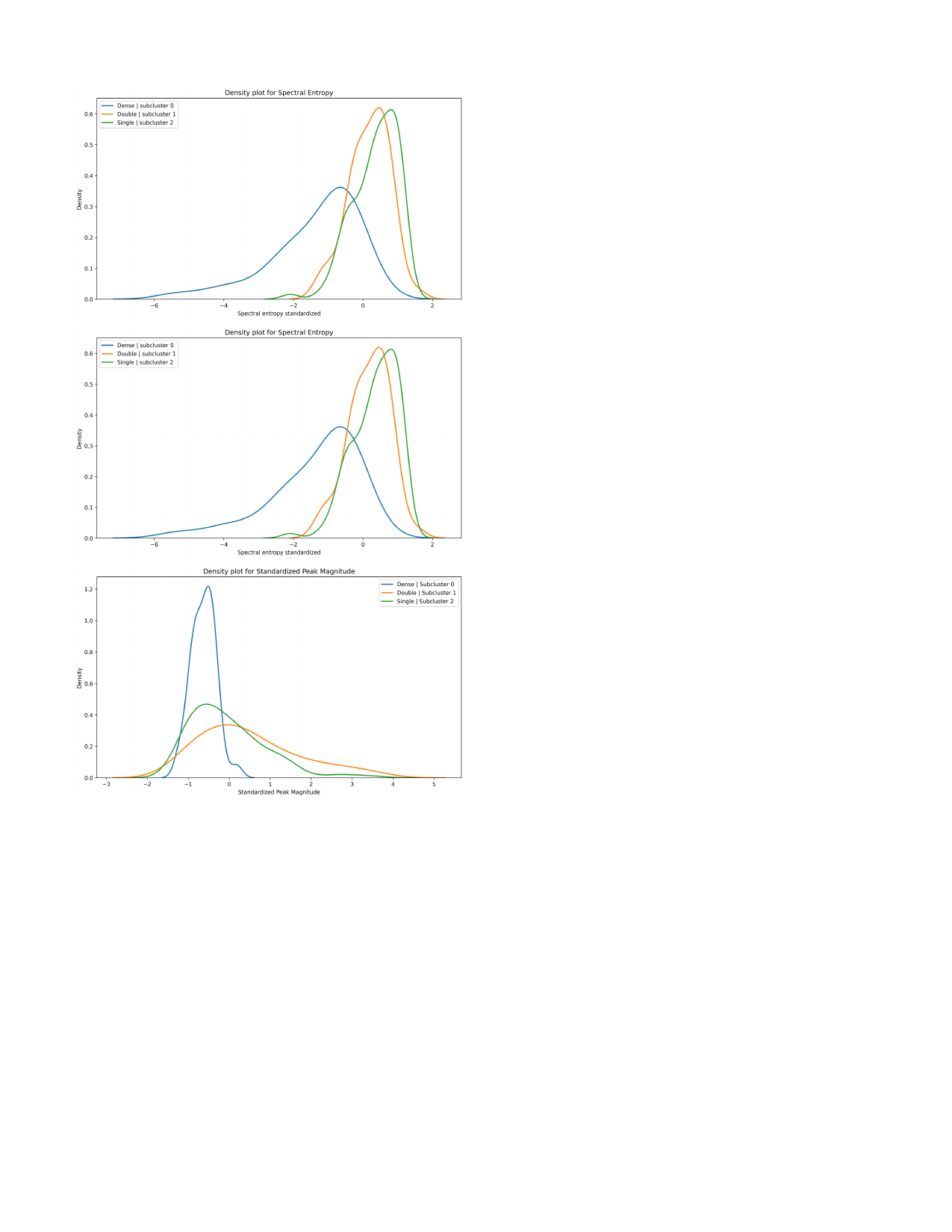
Feature Engineering: 36 features engineered from time and frequency domains, designed to capture signal structure rather than raw amplitude. Detrending removes runtime-correlated drift; pairwise cross-accelerometer features capture differences between both sensors, a correction to prior work that used only one.
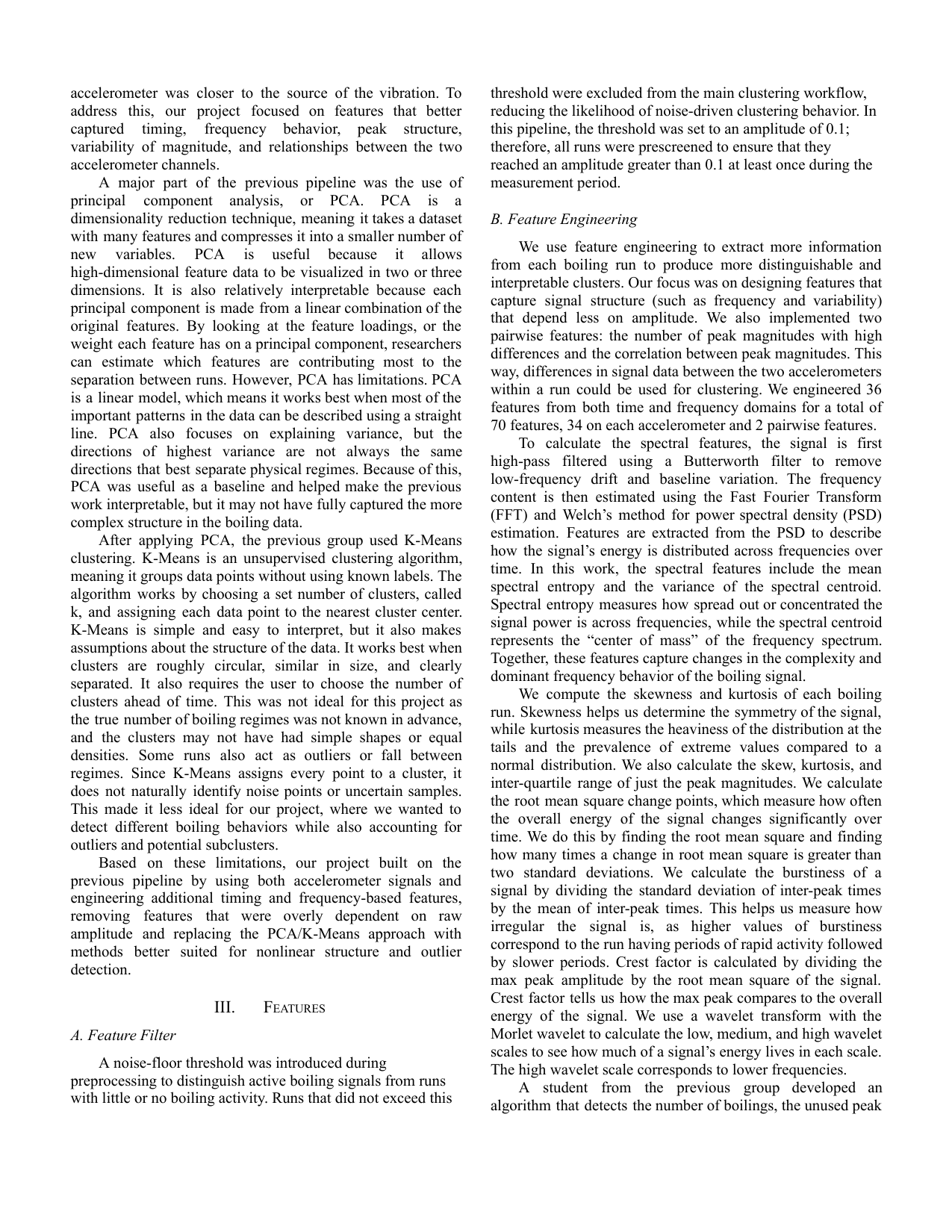
Dimensionality Reduction: PCA, diffusion maps, and UMAP were evaluated head-to-head. UMAP produced the clearest separation and was selected for the final pipeline.
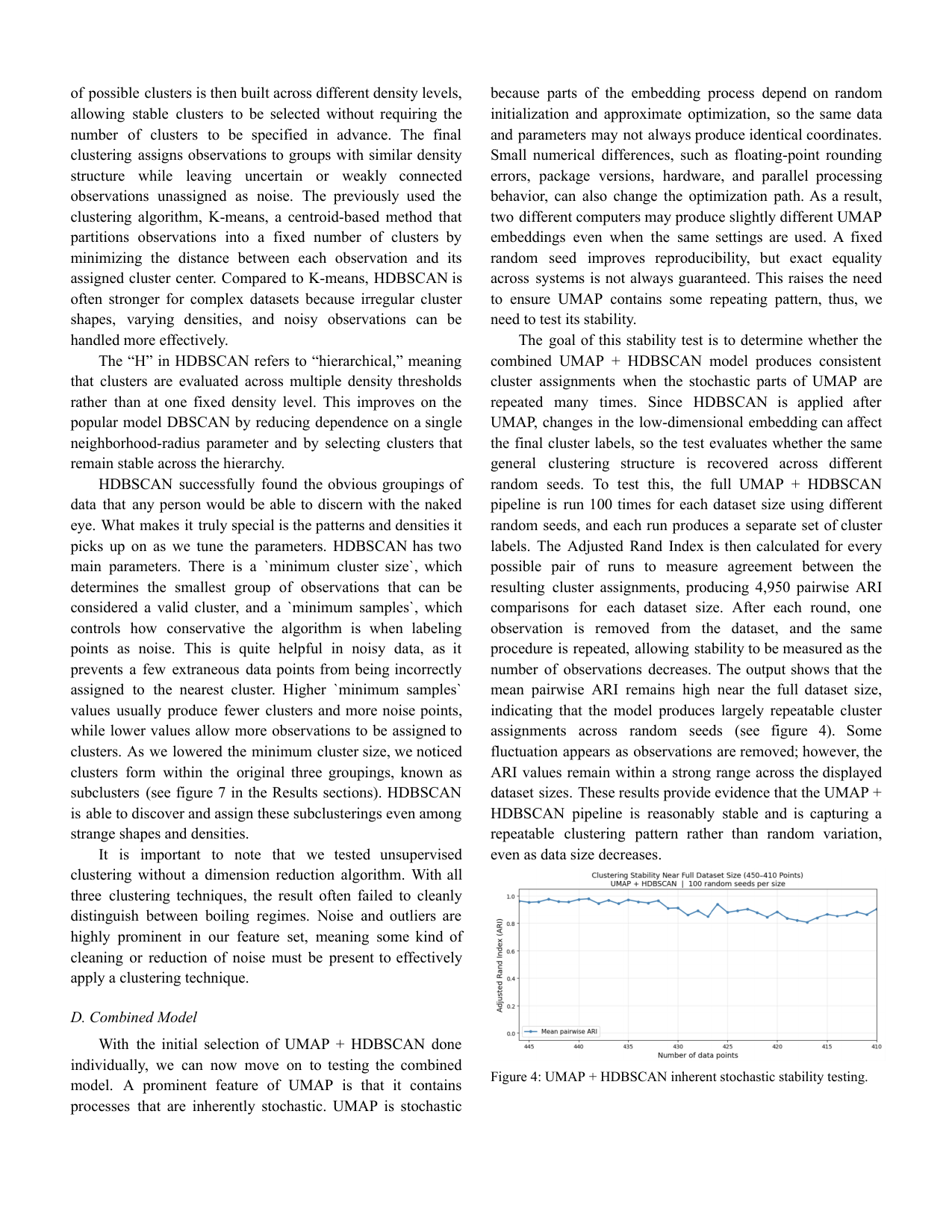
Clustering: K-Means, HDBSCAN, and spectral clustering were compared. HDBSCAN was chosen for its ability to handle variable-density clusters and naturally identify outliers. Final pipeline: UMAP + HDBSCAN.
Results: Six Boiling Regimes
- Lack of Boiling: filtered by noise-floor threshold before clustering
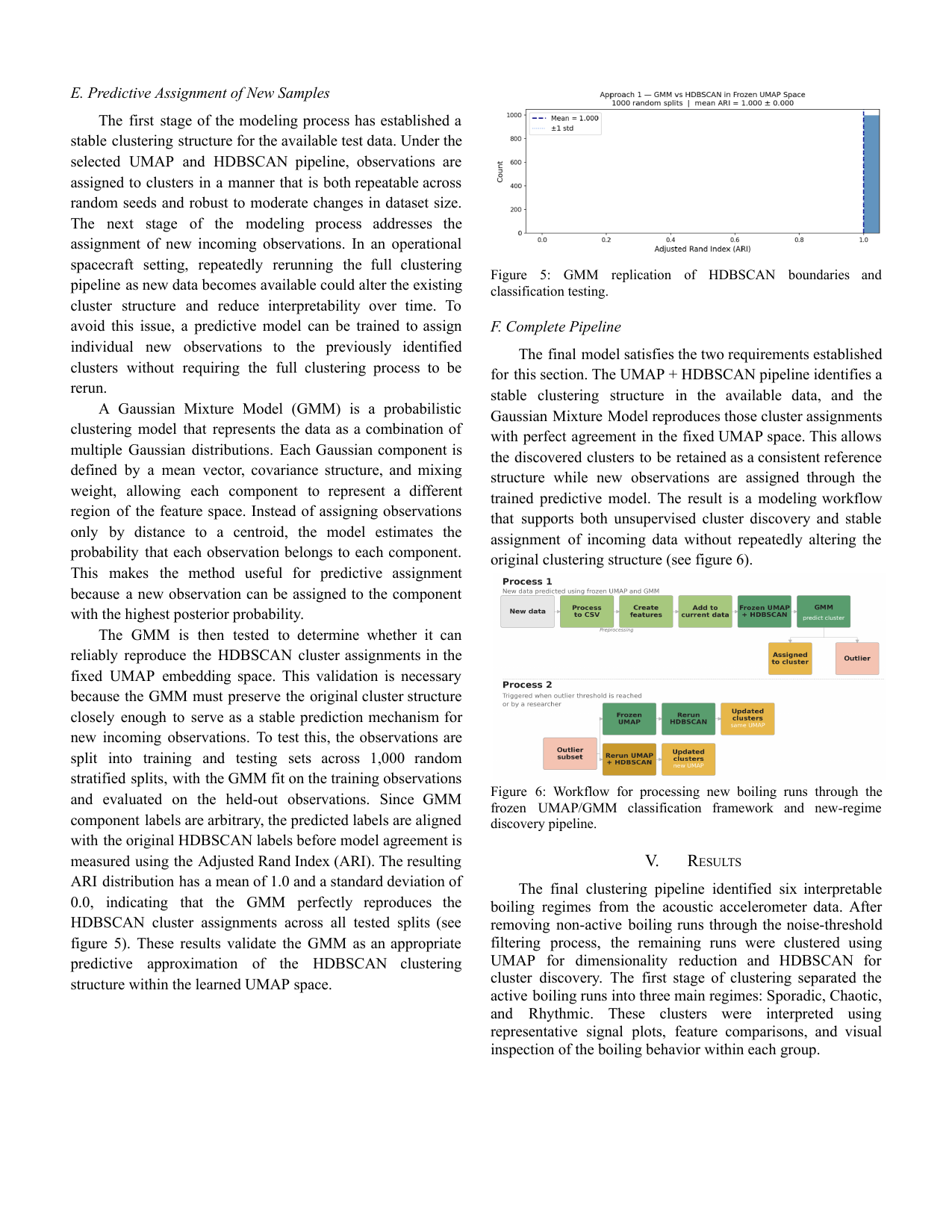
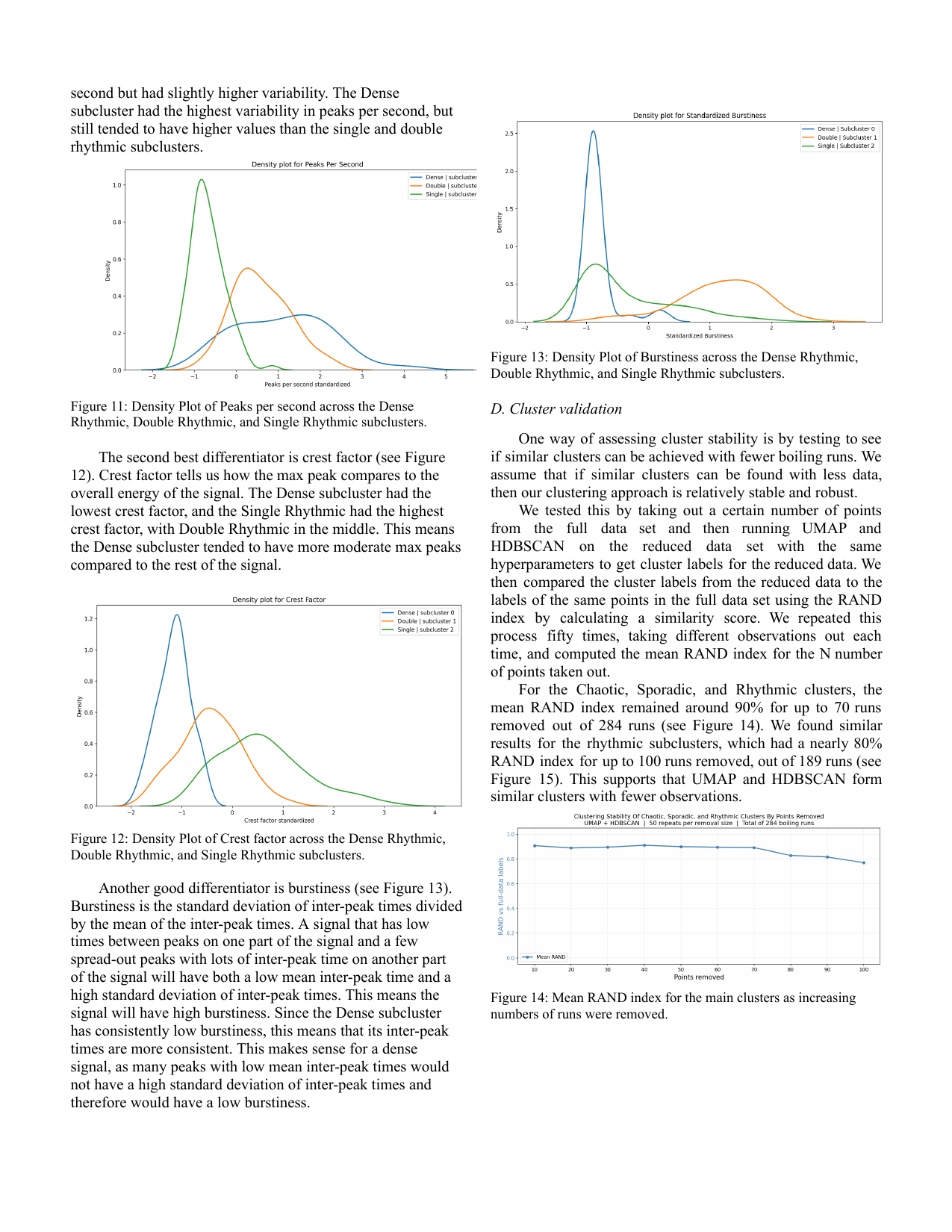
- Sporadic: rare, isolated spikes with no consistent timing
- Chaotic: irregular bursts of varying height and frequency
- Rhythmic: consistent, repeating spike patterns
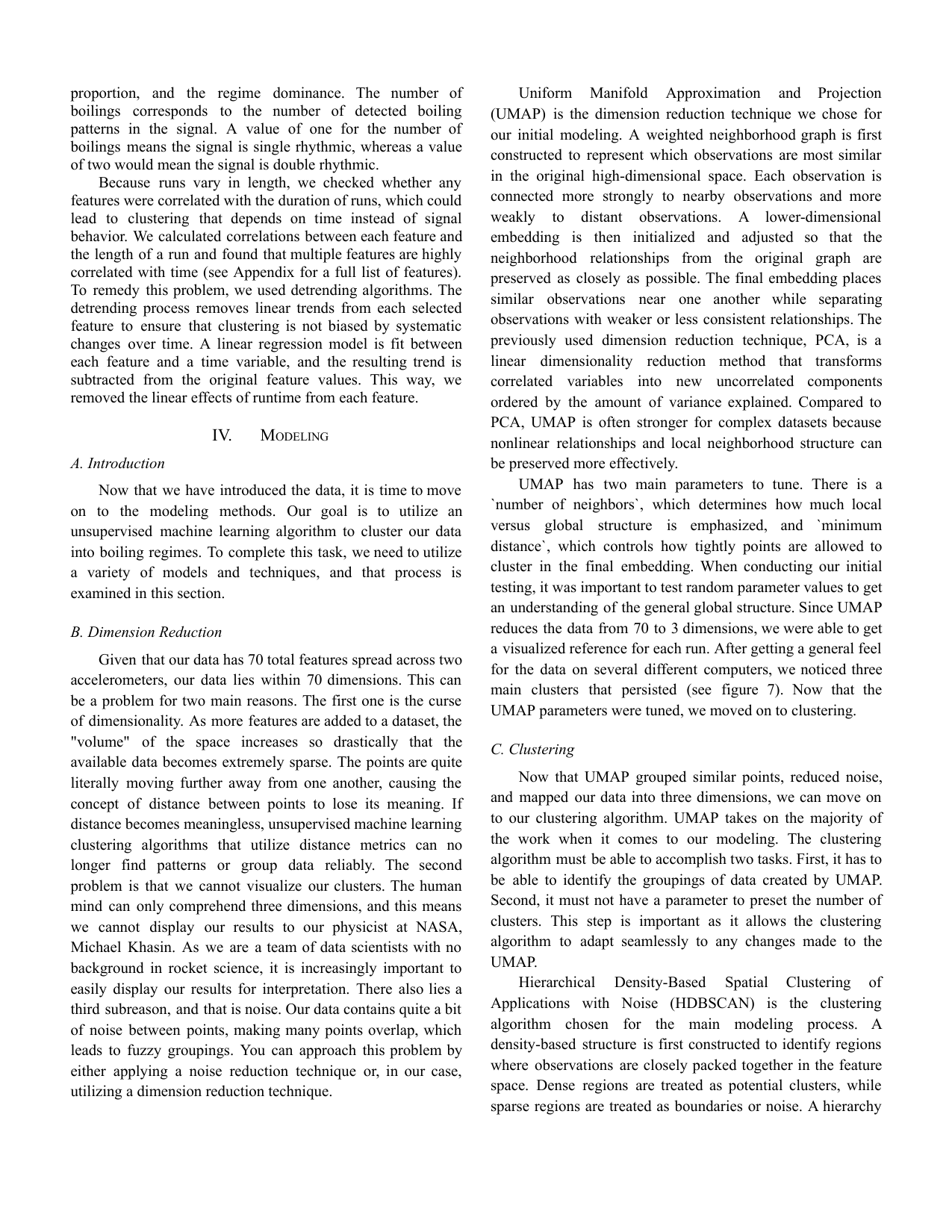
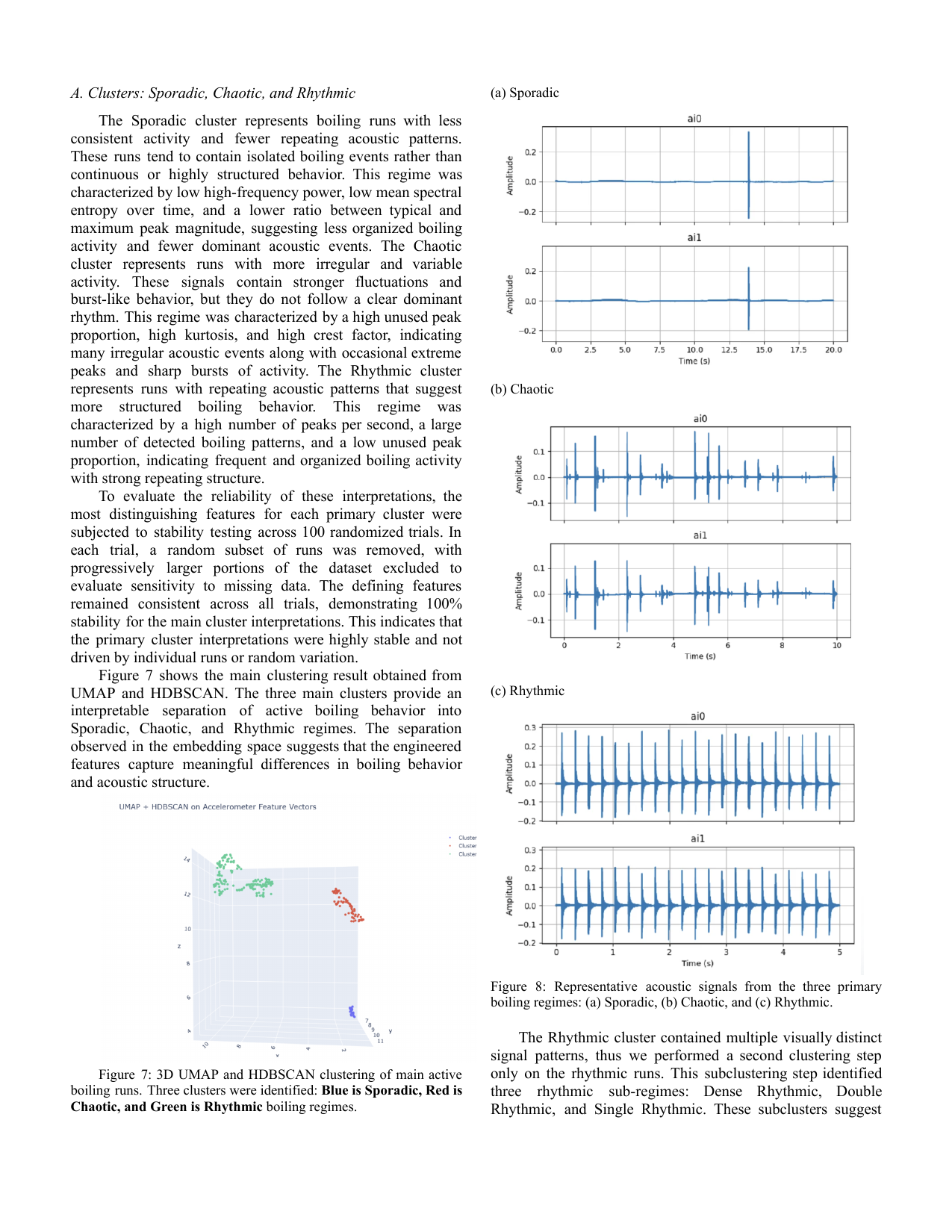
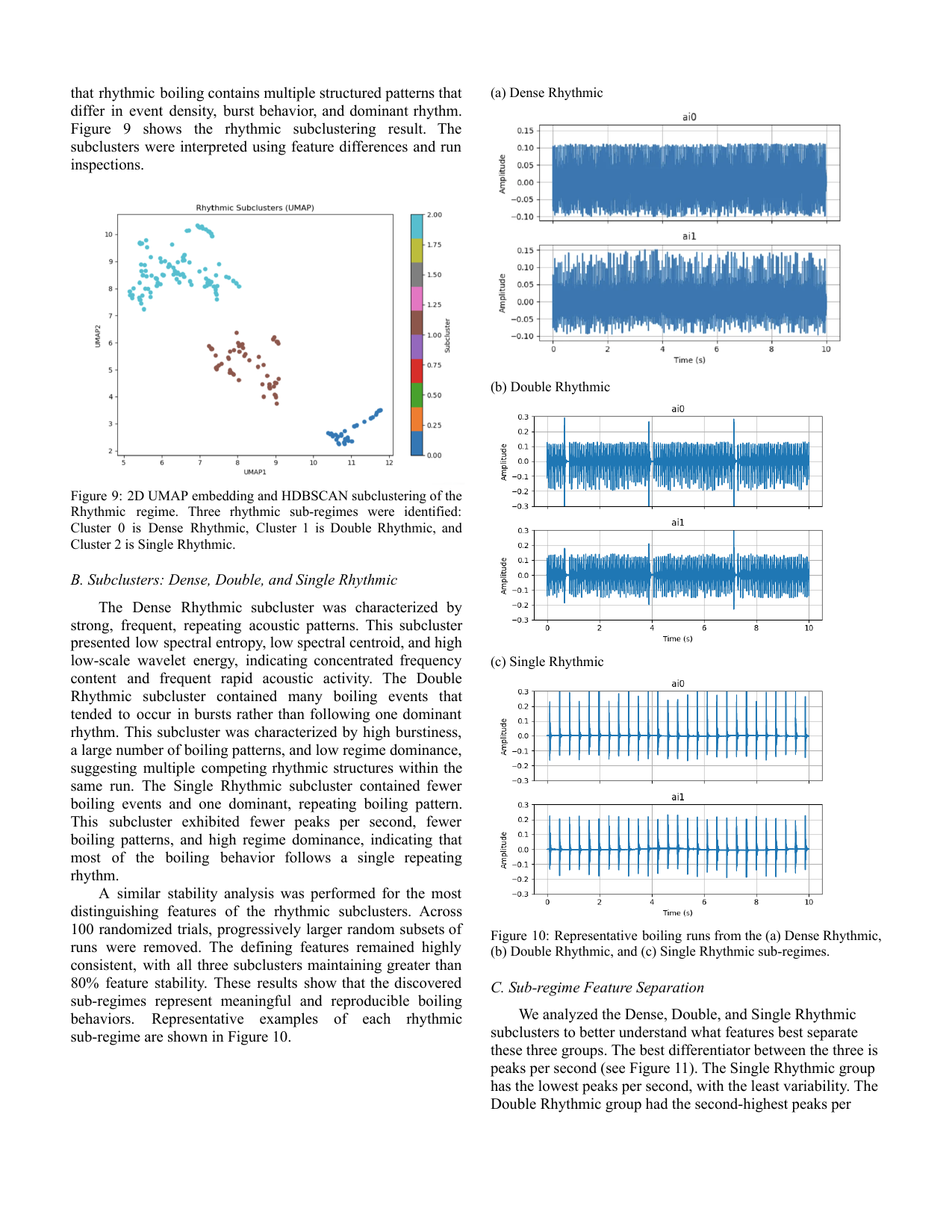
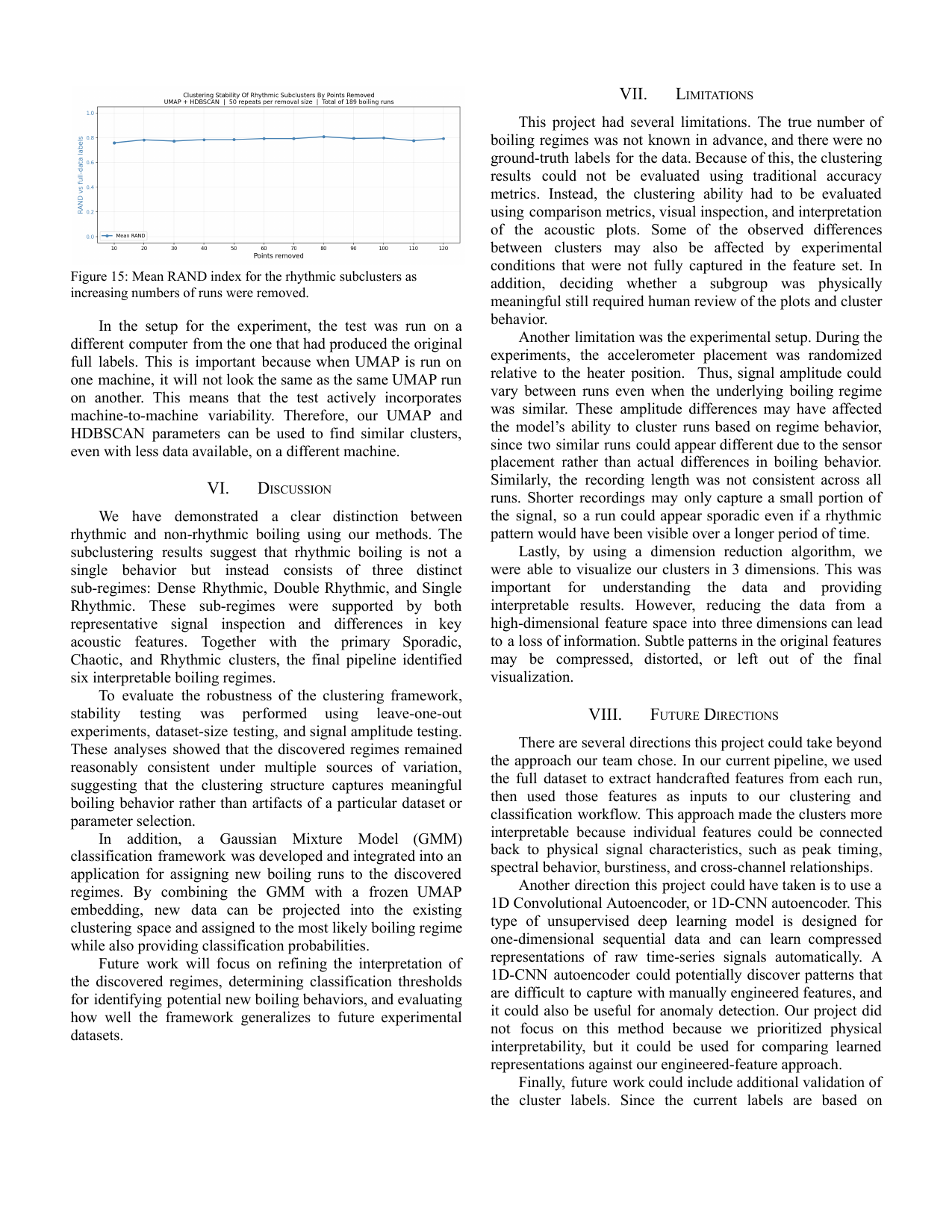
- Dense / Double Rhythmic: distinct subclusters within rhythmic boiling
- Single Rhythmic with Climax: rhythmic behavior with a distinctive amplitude peak
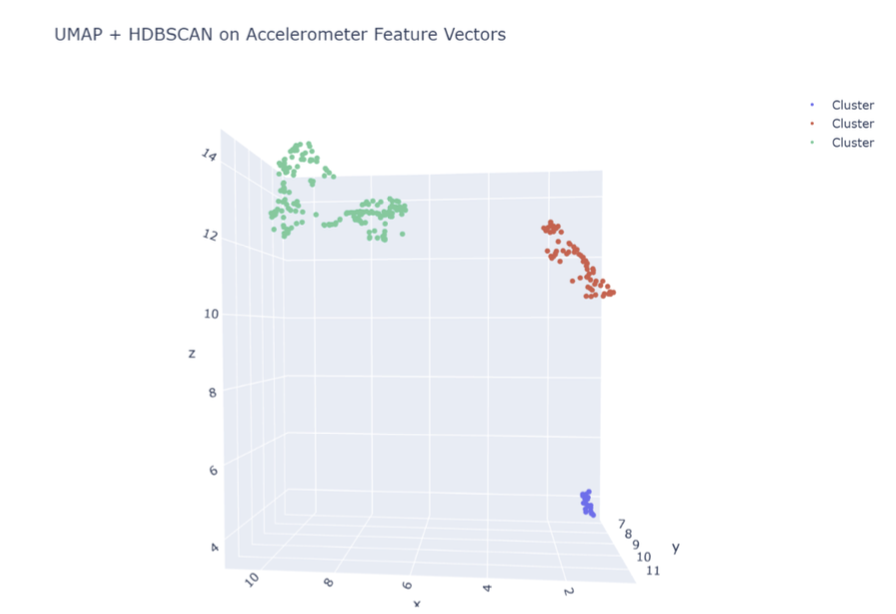
UMAP + HDBSCAN: three active boiling clusters
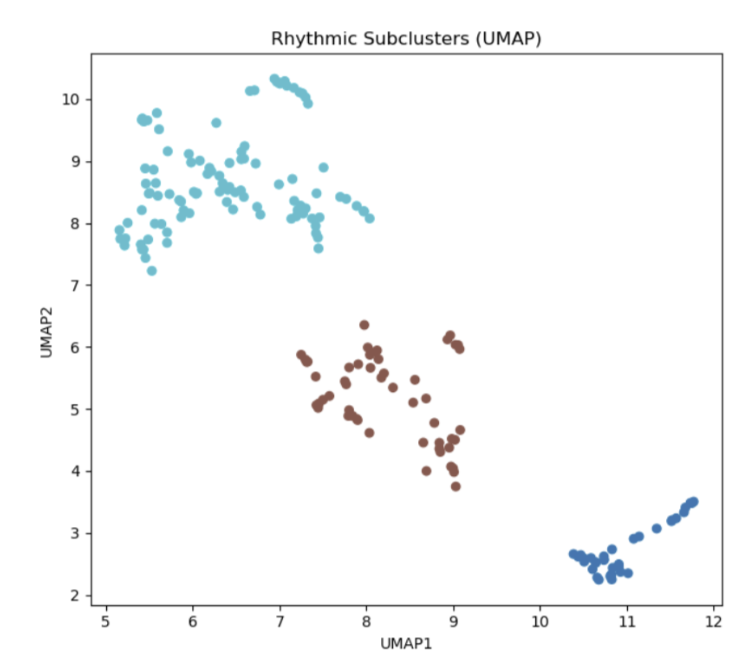
Subclustering within the rhythmic regime
Research Poster
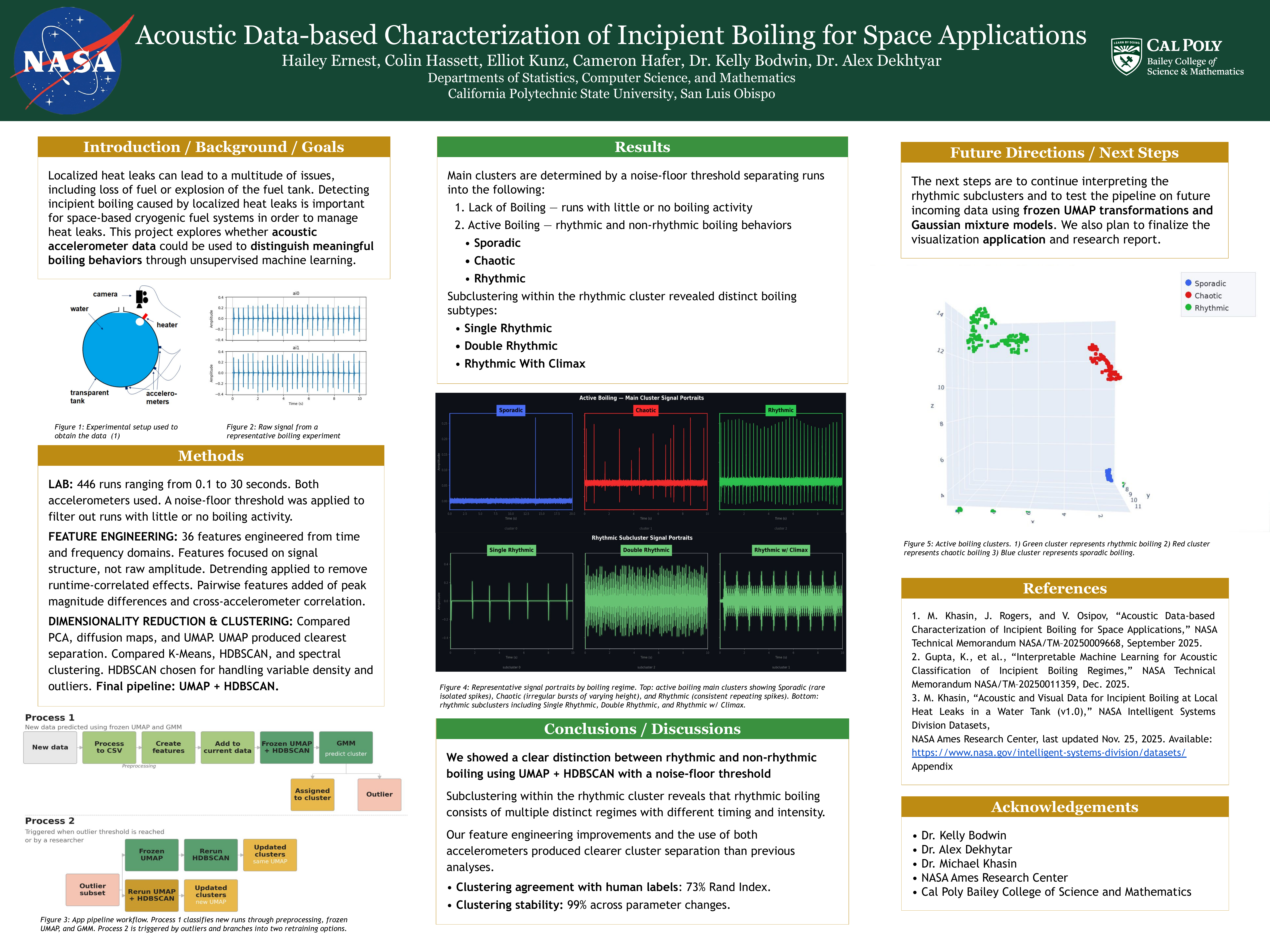
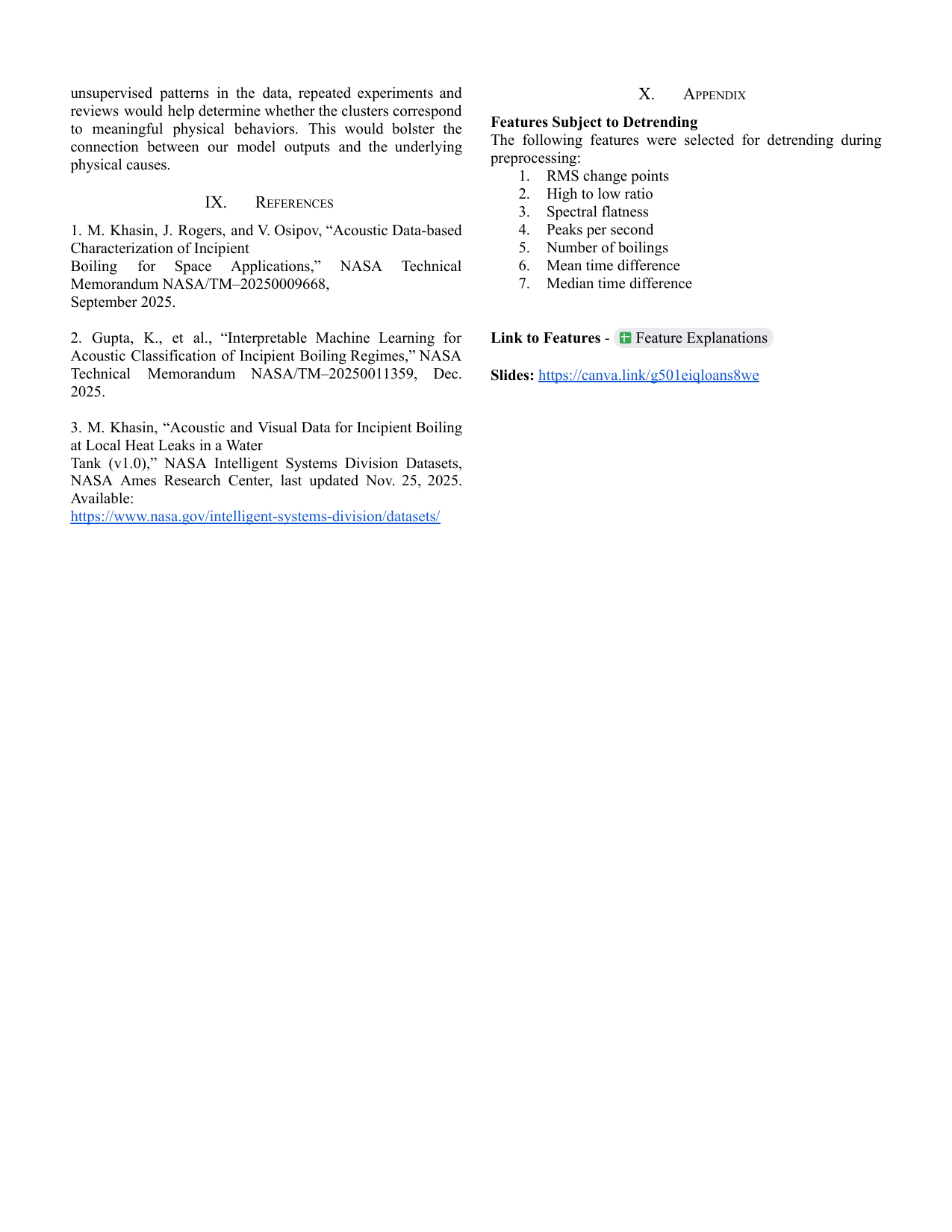
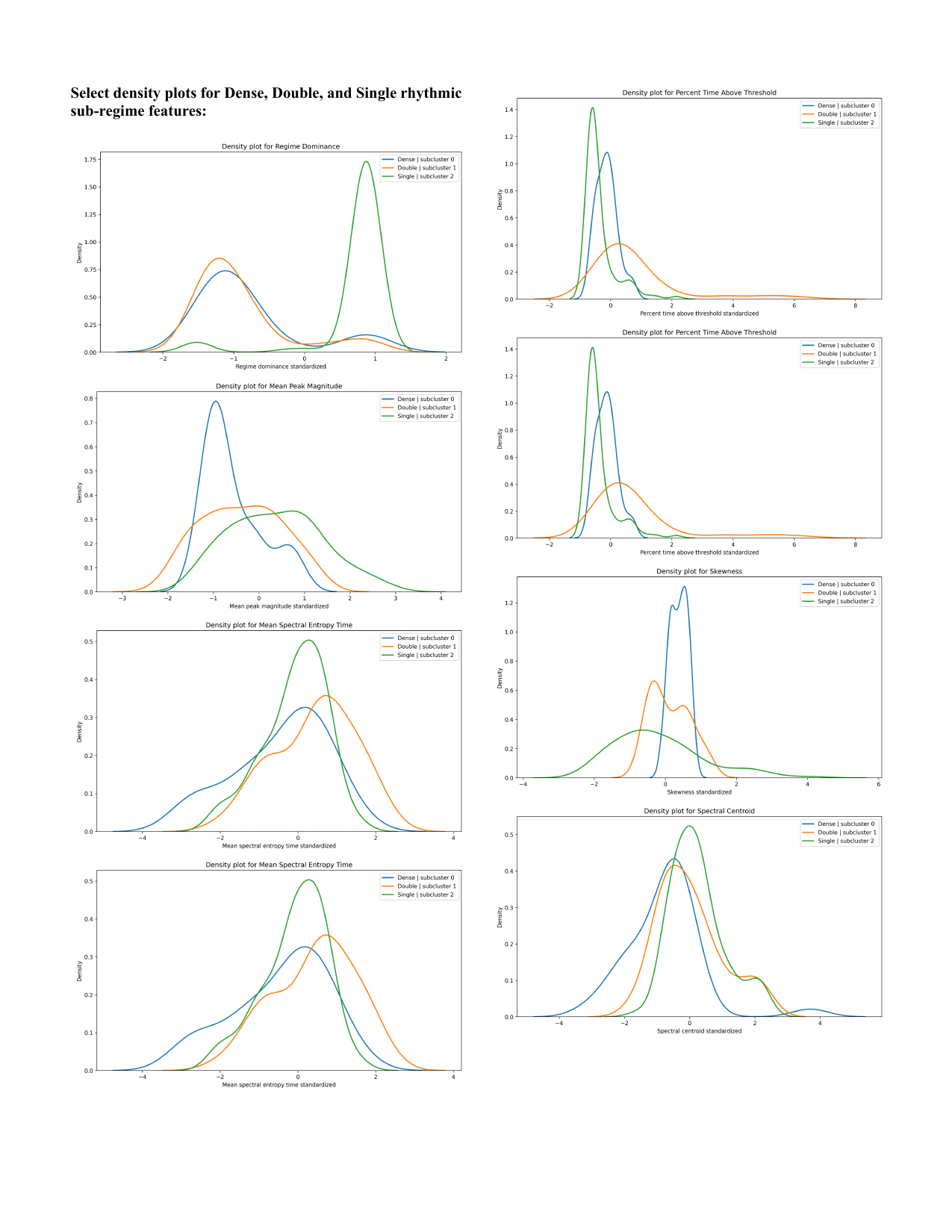
Full Report
Navigate the 13-page final report below.